Introduction
All developing civilizations exhibit a reverence for the sky and its contents.
Today we no longer have a need for practical astronomy in our daily lives.
Though we may try, we cannot really appreciate the degree to which the minds of the ancients were preoccupied with astronomical pursuits.
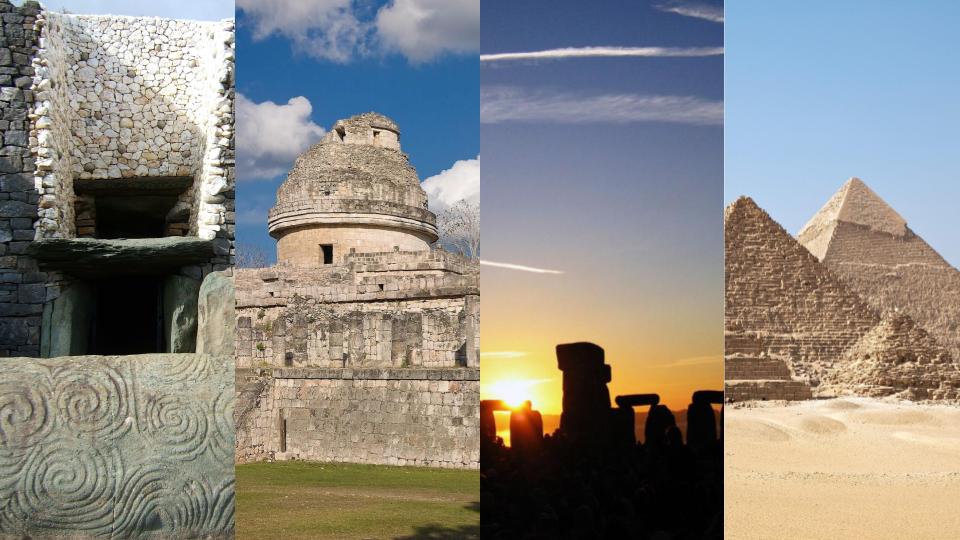
The heavens touched nearly every aspect of their culture: myths, religions, astrological predictions, weather predictions, agriculture, harvesting and hunting, celebrations and festivities, astronomical predictions, design and construction of pyramids, temples, cities and ceremonial centers. In many cases we found strong relationships between the above activities.
In the case of old mayan people, we can constrain its influence in the ancient mesoamerica, and more precisely in the zone of Gulf Coast, the Yucatan Peninsula, and the actual territory of Guatemala, Belize, El Salvador and Honduras.
However, it is interesting that much of mathematical knowledge, interest around heavens, architectonic knowledge and ways to measure time in cycles, come from Olmec civilization around 1000 years B.C.
The period of greatest sophistication in the civilization of Mesoamerica occurred during A.D. 300-900, the called Classic Period, and characterized principally by the appearance of highly organized settlements, an advanced calendar, a complex religious pantheon, and the rise of social elites.
In this period we found cities such as Tikal, Copan and Palenque.
Much of knowledge about Mesoamerica civilizations comes from fragments of original manuscripts or “codices”. In the case of Maya, we have only four: Dresden, Paris, Madrid and Grolier. This contains, among other things, information pertaining to the heavens: lunar and solar almanacs, eclipses, even a Venus ephemeris usable for more than 100 years.
A few more codices survive from Central Mexico, or Mexica-Aztec people.
From the Madrid Codex, a Maya document written shortly before the conquest, reflects the central role of astronomy among the civilizations of Mesoamerica. It shows an astronomer observing the stars.
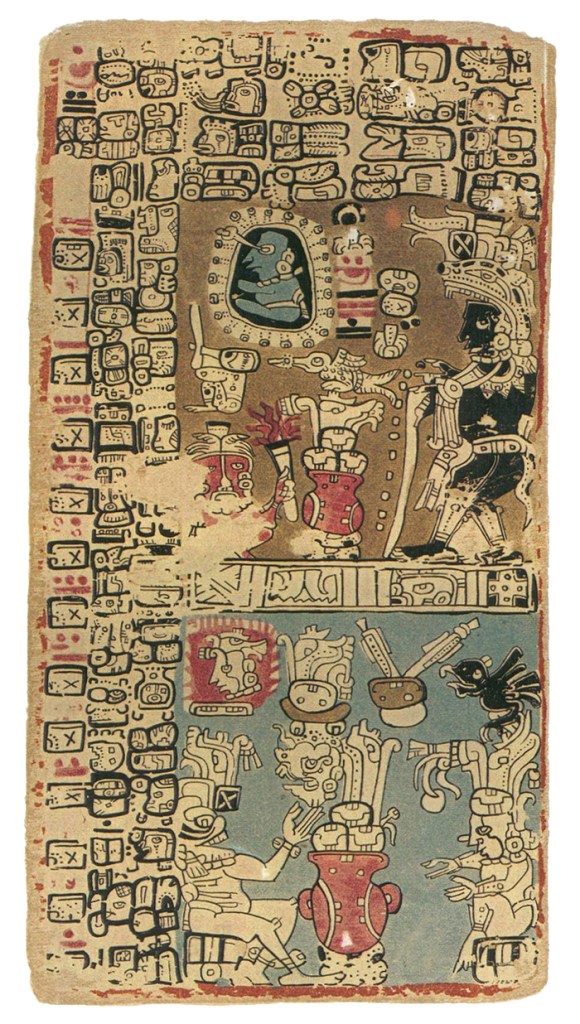
Seated at his station or place of observation, he seems to be plunking them out of the sky with his extended eyes. The skywatcher is surrounded by hieroglyphs and Maya numbers which presumably relate to his astronomical events.
Stargazing may have been a common occupation among the nobility.
One of the most important pieces of information from heaven, among ancient civilizations, was the strong relationships between to survive, erect buildings and measure astronomical positions.
In this sense, it is well known that both natural and artificial constructions were used as astronomical marks, in order to constrain dates, calendars, oversee weather and obtain food from harvesting or hunting.
A natural construction is, for example, a hill, a volcano, or a far panorama with enough irregularities.
However, in the plain Yucatan Peninsula we do not have such natural things. So, probably this is one of the main reasons for constructing estelas, monoliths, or pyramids to be used as artificial astronomical marks.
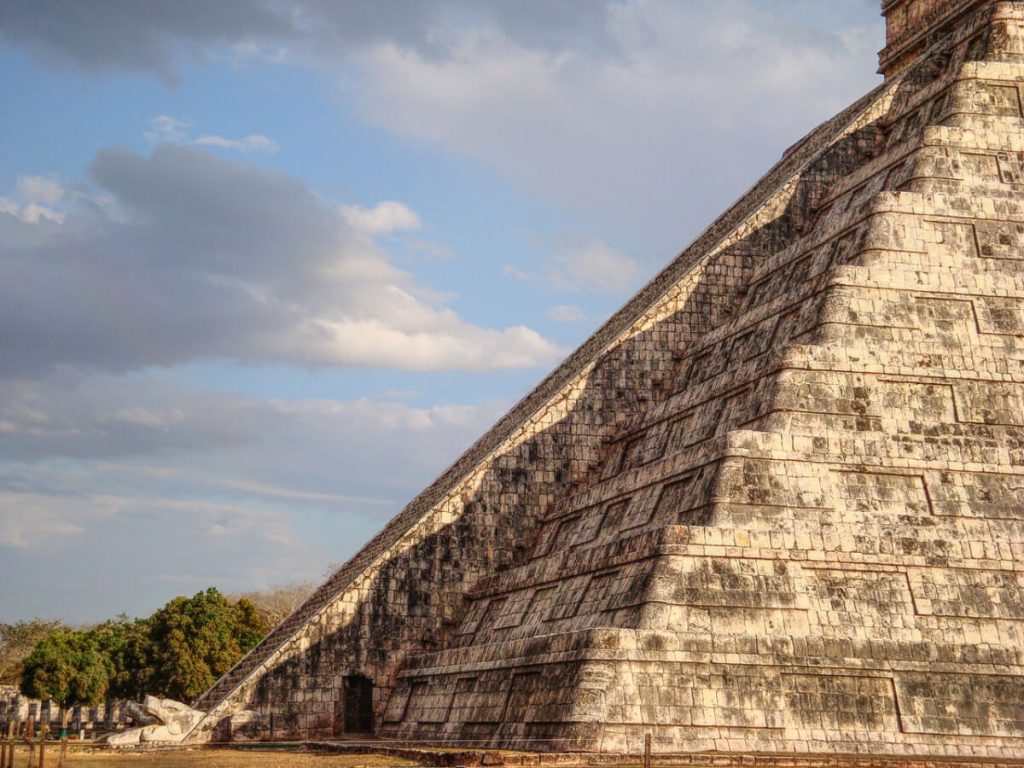
The best example is Chichen itza, with the well-known light and shadow spectacle in the north stairs: every equinox a dragon or snail is drawed, and it is associated with Kukulcan, the feathered serpent.
Of course, there are many other markers that probably are much more important but less known. For example, columns and wells that show with real precision the passage of the Sun exactly over our head, the zenithal pass of the Sun (between May 20th and 25th in this zone).
In this hotel we have an astronomical mark too.
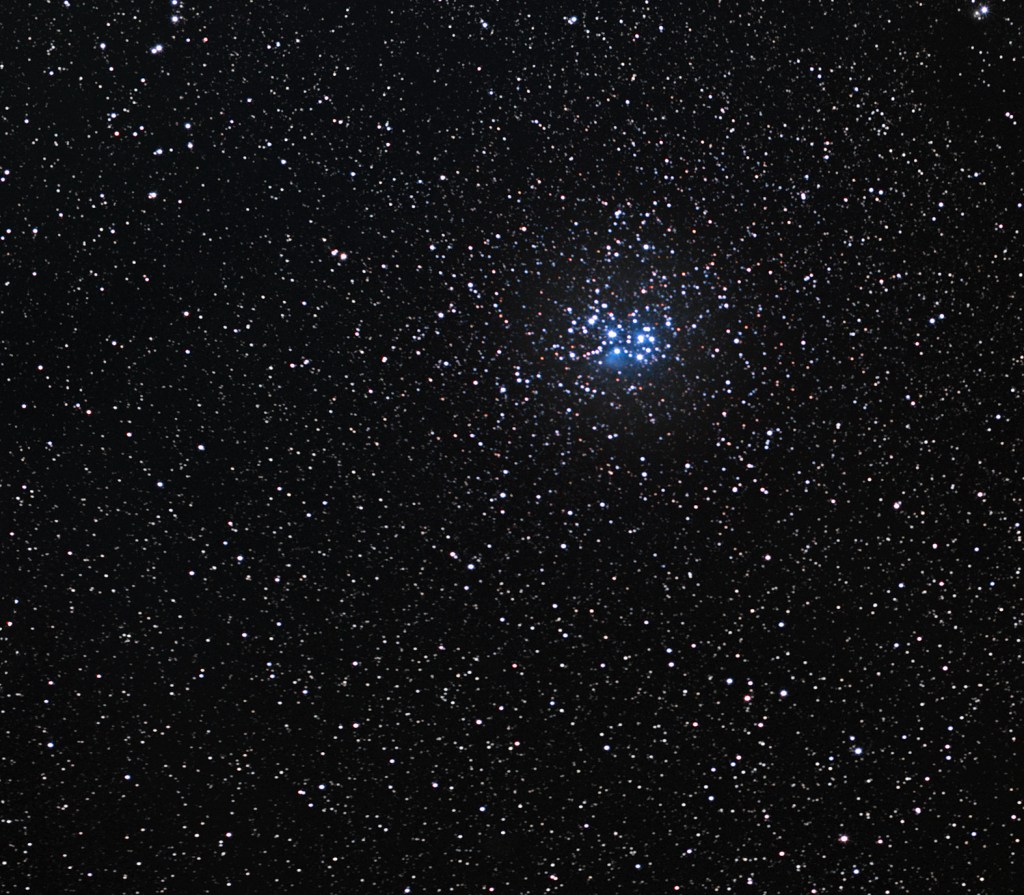
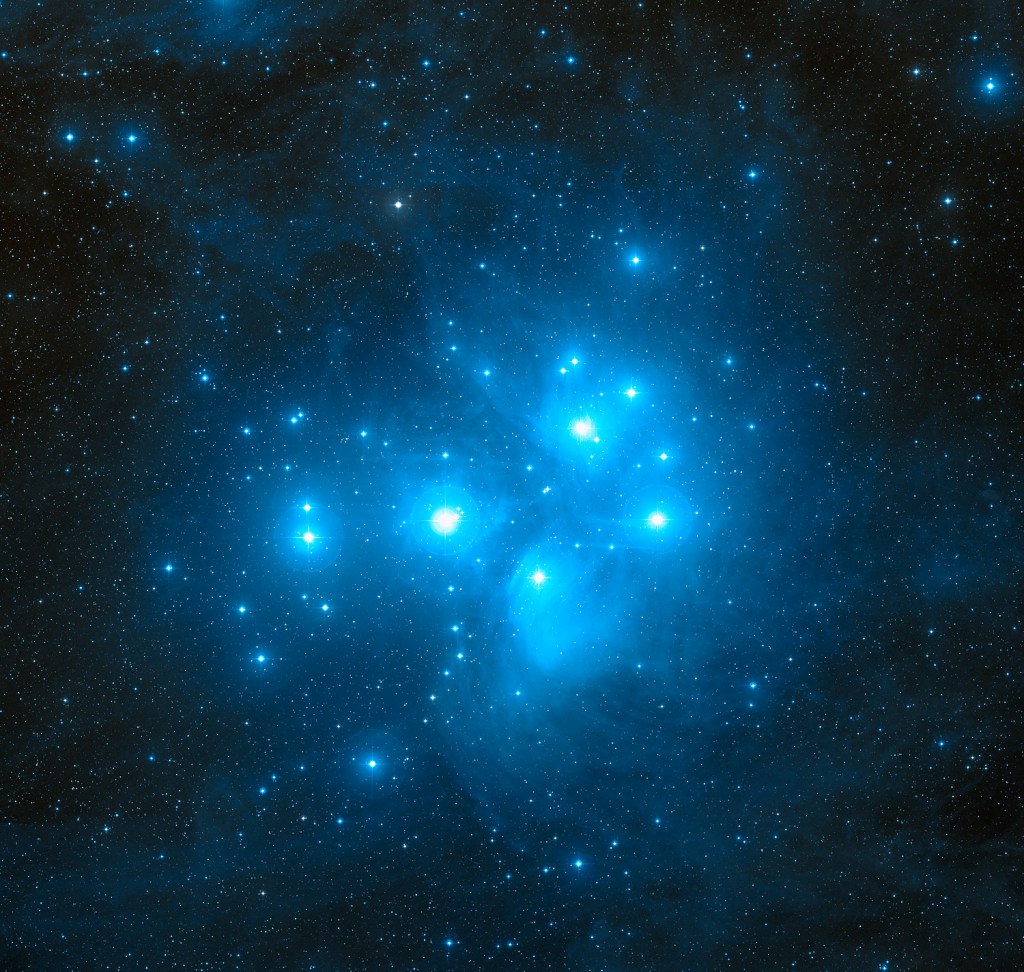
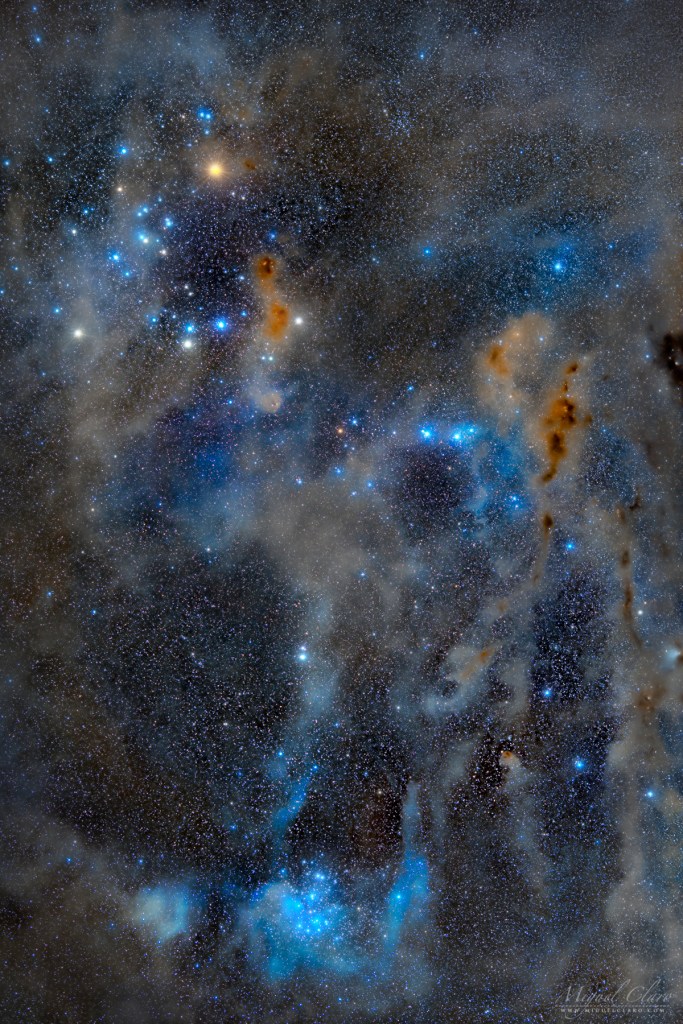
Exactly over your head you can observe, in different moments of the year, the group of stars that we call Pleiades. The period of time to observe the Pleiades through this window changes. For example, in the middle of October we need to stay here around 3 am. In the middle of November we need to stay here around midnight. And in the middle of January to observe it around 9 pm.
However, due to the precession movement of earth, just in the middle of the Classic Period for Maya civilizations, around A.D. 600, Pleiades were exactly over our head, around midnight in the last days of October and the first of November.
There are some mythological stories that correlate that group of stars with the souls of dead people. Could this be the origin of Day of Deads in Mexico and Central america?
In the same way that Ancient Maya constructed buildings to mark astronomical positions, the group of architects in this hotel left us that window in the sky to appreciate and put into value the Mayan knowledge about heaven.
Pleiades around the antique world
But, why Pleiades? Was this star cluster really important for Ancient maya civilization? Well, we have strong evidence that Pleiades was important for Mexicas or Aztecs, and other civilizations around the world.
[But, we will reserve this talk for another day. Or if you prefer, for the beach club, where we have telescopes and binocular to observe, not the Pleiades, because their are really near to the Sun, or they appear early in the dawn or midnight, but another star cluster that it is visible right now and is similar to Pleiades.]
The group of stars known to the western world as the Pleiades has long been celebrated throughout the world. References to these stars appear in Mesopotamian and Chinese writings dated 3000 BC and 2357 BC, respectively, and in early Egyptian and Hindu works, the Talmud, the Koran, the Bible, and Homer’s Iliad and Odyssey.
Early evidence for the Pleiades in the New World consists of archaeological constructions apparently aligned with the stars’ celestial positions, e.g., a Nazca desert feature dated c. 500-700 AD, streets and buildings of the great city of Teotihuacan, c. 150-750 AD.
Later Inca, Aztec priests and the Emperor Moctezuma still observed the Pleiades, regarding them as an omen of considerable significance. For the ancient Maya a bird-like glyph is thought to have represented these stars, while for the modern Mayan descendants the Pleiades are identified as “those who travel together,” “a handul,” the “Seven Kinds,” and in November, as “signal of the night”.
North American natives to observe the Pleiades include the Cheyenne, Paviotso, Kiowa, Cherokee, Shasta, Tewa, Zuni, Hopi, PaiPai, and Inui.
The Pleiades are illustrated on the Night Sky figures of Navajo sandpaintings, on the masks of Pueblo Kachinas, and on the upper black painted “night sky” area of Blackfeet lodges.
A Pawnee Sky Map drawn on buckskin places these stars quite accurately on the “winter” side in their proper relative magnitude and position; and if, as Pawnee informants reported, villages were located so as to form a “reflected picture” of the stars they considered important, then the Pleiades celebrated in the Hake ceremony and song cited above also influenced their site distribution.
It has also been proposed that the Pleiades along with other star groups served as celestial templates for particular clusters of prehistoric conical mounds in the Midwest.
The widespread fame of the Pleiades through time and space by so many diverse cultures around the world may be attributed to two factors. The first is simply their high visibility and distinctive configuration. Identified as an open (or galactic) cluster, the Pleiades is made up of “bright gemlike stars, well spaced and easily distinguished”.
Seven of its stars are of sufficient magnitude to be easily seen with the naked eye on a dark night.
Their special brilliance in the night sky is a result of their white-blue color, this, in turn, being the product of their young age and very high temperatures. Finally, the Pleiades are easily located as part of the large and prominent Taurus constellation, for they form the shoulder of the Bull whose eye (Aldebaran, Mag. 2) is among the brightest stars in the heavens.
A second factor, however, seems to be the basis for the special significance of the Pleiades, that is, the schedule of their annual celestial movements as seen from the earth (except in the most southern latitudes). Each year this star group appears to move (the earth is actually the mover) across the sky in an arc approximating the ecliptic, the apparent annual path of the sun.
At first viewing, about an hour after sunset, the Pleiades first appear each Fall on the eastern horizon. On each succeeding evening at this time they may be seen at a slightly higher position above the horizon until midwinter when they rise directly overhead, the point known as the zenith; they then gradually appear to descent toward the western horizon each night until they disappear by spring, not to be seen again at first viewing until fall (though present in the morning hours and by August before midnight).
Because of their schedule, the Pleiades, with Taurus, are listed as a Winter Constellation.
This annual schedule gains importance among many cultures of the world because the date and time of particular celestial positions often correlate with important seasonal changes and activities. Knowledge of their positions and proper motion permits the Pleiades to serve as a “fundamental” star; that is, as a frame of reference (cf, Satterthwaite 1973:2) for cultural activities, most commonly to mark the time for agricultural practices or to begin a new year.
This usage dates back to at least the ancient Greeks, for according to Hesiod “When the stars of the Pleiades, the daughters of Atlas, are rising Harvesting begins, but the seeding takes place when they are setting” (Ley 1963).
This schedule is perhaps represented on an earlier Minoan tablet bearing icons for the Pleiades (Baity 1973:407). The number of more recent ethnographic examples consulting the Pleiades for agricultural or calendrical purposes is extensive and includes peoples scattered around the world (Andree 1893). The Amazulu and Bantu, for example, call them the “digging stars” and “ploughing constellation” while Oceanian cultivators use them to celebrate the New Year as well.
In America the rising and setting of the Pleiades was the basis for a primitive calendar in Peru, and the “little Parrots,” as the Pleiades are known in the Andean Highlands, “took care of the seeds” for the Inca and “indeed, were supposed to have created them”.
Among the Arawak of Guiana the same word (widua) denotes both “year” and “Pleiades,” and among the ancient Maya the same bird-like glyph thought to represent these stars may also mark the month (Moan) for the New Year (Andree 1893:366; Forstmann 1904:514).
Orientation
Let me show you a final thing, not only about Maya archaeoastronomy, but used by other ancient civilizations. This is: Orientation.
Orientation, as the root word suggests, originally meant the angular deviation in direction from the true east or Orient, a place chosen perhaps because it represented the median position of sunrises over the course of the year—the region one faced to pray to the sun god.
So, the question is, In which direction is the Orient? Early in the morning we know that without problems, but right now?
We can use stars in order to find, in an approximate way, the cardinal points: north, south, east and west.
In the night, around the year, we can use two groups of stars to find the north. One of these is the Big Dipper, which is part of the body of Ursa Major, the Big Bear. The other is the peculiar 3 or M, in the Cassioepia constellation.
Then, with these two asterisms we can find the north.
In ancient Maya, cardinal points were part of its cosmovision. The whole mayan cosmogony was divided in thirteen floors or levels, with the Ceiba tree just in the level on earth.
The sacred tree was considered as a link between the underworld and the superior levels in which we found the stars.
So, on the terrestrial level, orientation was an important issue that was resolved with the visibility and position of stars at night and the Sun during the day.
For the Maya a single word, kin, signified time, day and sun. The directions of the petals of the floral design on some kin glyphs probably correspond to the extreme positions of the sun along the horizon.
It is common that time and space is divided in four parts on the terrestrial level.
The division of each of these cosmograms into four parts with the world at the center emphasizes the importance of the four world quarters. Each world direction had ist associated god, or bacab or sky bearer and color, a concept which was widespread through Mesoamerica.
The Maya called the east likin or li’kin, the direction “where the Sun rises”, it was represented by the red color on the sunrise. The west or “black for sunset” was chikin or chi’kin, meaning “where the sun sets”. They use of kin as the second syllable signifies the paramount nature of the sunrise-sunset axes. North, or xaman, means “on the right hand of the Sun” and was symbolized by white; and south, nohol or no’hol, means “on the left hand of the Sun”, and was yellow.
 Cielos Oscuros